Unlocking Ultimate Drift Potential Through Telemetry plus Exact Engineering
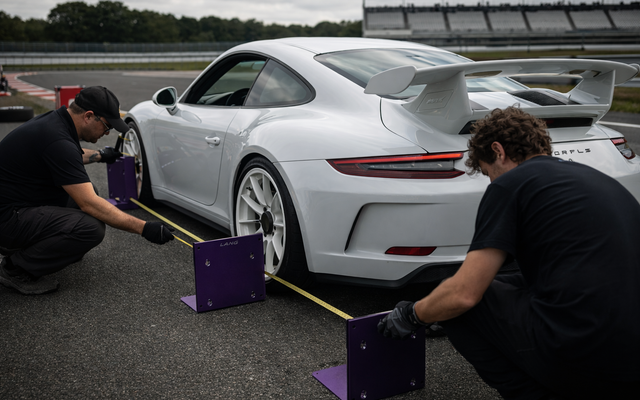
Inside the demanding realm of modern professional sliding, podium finishes is far more than exclusively a result of sheer torque or behind-the-wheel aggression. Rather, it has evolved into a complex discipline which requires a scrupulous blend of picking a time-tested car, arming it with the highest-quality drift-spec parts, and, most critically, comprehending its dynamic performance on the circuit through sophisticated drift telemetry software. This comprehensive guide functions as your roadmap from the very first concept of a drift build all the way to the last engineering-refined adjustments that transform a strong vehicle into a repeatable champion. We will thoroughly explore the methodical process of vehicle alignment optimization, illustrating how a modern vehicle dynamics tool like precise measurement hardware eradicates guesswork and offers exceptional clarity into your chassis's real-world performance.
The cornerstone of any successful competitive sliding vehicle is, undoubtedly, the base vehicle itself. Several cars have achieved legendary reputation within the international sliding community due to their natural balance, strong construction, and the enormous range of aftermarket components available. Selecting the optimal starting point is the primary and most important selection a driver will make. As an example, the BMW E36 is widely regarded as perhaps the the best overall drift platforms of all time. Its almost ideal balanced front-to-rear weight, combined with a rear-wheel-drive setup and extremely reliable six-cylinder motors, creates a car that is both easy to handle for novices and extremely effective in the possession of a professional pilot. The next step of this lineage, the BMW E46, improves on these strengths with a increasingly developed chassis, increased wheel track for greater stability, and still increased turning capability straight from the factory. A different dominant option in the pro scene is the Chevrolet Corvette C6.
This American sports car brings a particular array of advantages to the sliding discipline, such as a low-mass alloy chassis, a backwards-positioned transaxle that aids in an perfect balance, and the tremendous torque of a big LS V8 motor. This blend makes it an complete force on track, designed of entering and holding extended angles with seemingly easy application of acceleration. For those looking for exceptional bang-for-the-buck, the Nissan Z33 rises above as a excellent choice. It arrives from the factory with a rigid body structure, a effective factory LSD, and the smooth VQ series motor that offers plenty of horsepower and torque for practicing and progressing in the sport. Its newer version, the Nissan Z34, offers further refinements in body strength, steering geometry, and outright powerplant power, establishing its place as a favorite choice among competitive competitors. Further iconic cars that deserve attention are the agile Wankel-engined Mazda FC RX-7, the ever-present S13 Silvia/240SX, the V8-powered Ford SN95, the electronic-equipped E90 3 Series, and the small yet unbelievably engaging and teachable MX-5 Miata. Every single one of these platforms provides a different array of attributes, challenges, and potentials, but they all have in common the basic elements required to become a serious drift car.
However, picking the right platform is just the starting point. To release the complete capability of every of these cars, major upgrades to the steering geometry and damping and springing systems are utterly non-negotiable. This is where the domain of specialist drift-spec components enters sharp focus. The one most game-changing modification for a dedicated drift machine is the installation of a maximum-angle drift angle kit. These advanced systems, such as those manufactured by specialist companies like SLR, are created to dramatically enhance the chassis's maximum turning lock. A factory road car is severely restricted in how far its tires can turn, a engineering limitation for public road use. In oversteer driving, however, maximum steering input is constantly required to control and hold a drift. An modification kit replaces the OEM hubs, tie rods, and often control arms with pieces that enable the steered wheels to reach steering lock beyond 70 or even 80 degs, compared to a typical OEM setting of around 40 to 50 degrees.
This immensely increased capability gives the operator with significantly more control during a angle, allowing it to be considerably simpler to start a oversteer moment, hold it through a sweeping corner, and transition seamlessly from one angle to the other. The difference in drivability is truly profound. Paired with a correctly chosen modification is the just as essential upgrade to the vehicle's damping system. Generic or including expensive street coilovers are just not engineered for the specific and brutal needs of sliding. A dedicated pair of coilovers is crucial. These specialized suspension components incorporate unique piston tuning and spring stiffness that are tuned for the rapid mass transition that is inherent of aggressive driving. When a driver starts a angle, the chassis's mass is thrown rapidly to the outer of the bend. Optimal drift-spec coilovers manage this transfer in a consistent way, enabling the car to find its balance promptly and offering the operator precise feel through the wheel and driver's seat. They additionally enable exact tuning of ground clearance, shock absorber firmness, and weight balance, which are all key aspects of dialing in the car's handling to a specific track or driving style. As a system, a high-quality steering angle kit and a expertly chosen pair of performance adjustable dampers are the undeniable mechanical foundation upon which all future refinement is constructed.
Once the fundamental hardware is fitted, the subsequent essential stage in the build is the detailed setting of the car's alignment. This is the world of vehicle alignment optimization, a process that can feel overwhelmingly complex to the newcomer but is, in reality, the defining factor to converting a collection of capable components into a cohesive and controllable vehicle. The most discussed parameter of alignment for oversteer is certainly camber. Camber angle is the angle of the rim in relation to the perfectly straight plane when viewed from the front-on of the vehicle. If the top of the tire is tilted towards the chassis, this is called inward tilt. For sliding, negative camber on the steering wheels is generally employed and is regarded as critical. The reason is deeply tied to vehicle dynamics.
When a chassis is turning at high angles, the frame leans to the outside of the turn. This chassis roll forces the outside steering tire to reduce its best contact patch with the track surface. By applying negative camber, the tire is pre-angled to account for this tilt. As the car leans into the turn, the outside front tire gains a better contact patch against the track, increasing its traction at the critical point when it is needed most for steering authority. Usually, front axle angles for a competition sliding vehicle fall between approximately -3 degrees to as much as -5 degrees or even more, depending on the specifics of the chassis geometry, tire choice, and pilot feel. The rear axle tires also employ inward lean, but the values are usually less and subtler than the front. Too much negative camber at the back can make the car overly loose and suspension tuning tool difficult to manage on throttle application, as it diminishes the available tire footprint of the powered tires during straight-line throttle application. Hence, rear angles are frequently in the vicinity of -1 degree to -3 degrees, achieving a precise equilibrium between giving enough side bite to assist in starting and maintaining the drift while still preserving usable hook-up for power-down the corner. camber angle is just one component of the broader tuning equation, which furthermore involves toe, caster angle, and suspension-induced steering adjustment.
Toe is the angle of the tires when viewed from a bird's-eye view. Inward toe means the leading edges of the tires are closer together than the trailing edges, while negative toe means the converse. For sliding, a small amount of front axle toe out is often used to improve the initial response directional feel, making the car feel more responsive and willing to begin a drift. Rear axle toe angle is generally set to neutral or a incredibly minute amount of toe-in to encourage predictability under power. caster angle is the longitudinal or aft angle of the steering axis when looked at from the side of the car. More positive caster improves steering feel and stability confidence, and it additionally adds to negative camber increase during steering, which is highly beneficial. Tuning these values is a detailed interplay where a adjustment to a single value can and often will affect the remaining parameters. The traditional process for dialing in a chassis's suspension geometry for competition has for a long time been a tedious process of trial and error. A tuner or engineering group would introduce a change based on experience, test the car on track, use the operator's subjective feel and comments, and then apply another change. This process would iterate again and again until the chassis felt "acceptable" or the scheduled practice time was exhausted. This methodology is not just incredibly wasteful in terms of hours and costs, but it is additionally inherently flawed.
Human sensation is suspension tuning tool a infamously unreliable measurement tool, colored by numerous factors such as tiredness, varying track surfaces, ambient heat, and just the focus of the pilot on that particular run. What feels "oversteery" on one pass might feel "pushing" on the following run, resulting in contradictory data and counterproductive adjustments. This traditional limitation in car suspension tuning is precisely where state-of-the-art technology has stepped in to transform the process.
The advent and integration of specialized suspension tuning applications has ushered in a new era for tuning and perfecting high-performance sliding vehicles. These platforms, exemplified by innovative products like GripDial, function by directly recording the live physical performance of the chassis as it is operated on the circuit. Unlike using subjective impression, these systems collect measurable metrics on critical parameters such as shock absorber movement, individual tire rotation, acceleration drift angle kits forces, lock position, and accelerator and brake pedal position. This collected information flow is then processed by powerful applications that can visualize and decode the data in a clear way. For the very first time, tuners and builders can see precisely what the vehicle is doing at each moment of a slide. This ability revolutionizes the complete chassis setup workflow. Imagine the aforementioned challenge of dialing in the front negative camber for a particular vehicle. As an alternative to introducing a change from -3 degrees to -3.5 degrees and then testing many laps to try and "perceive" a change, a suspension tuning tool can deliver instant and clear data. The application can display graphically how the wheel's contact patch is performing during the most important phases of a slide: turn-in, holding the angle, and switch. It can reveal if the current camber setting is allowing the loaded tire to achieve optimal loading or if the compound is overloaded on its external edge.
The software can then suggest empirical advice for adjustment. Perhaps the telemetry reveals that the outside front tire is still overloading its outer shoulder at -3.5 degrees of camber, suggesting that a move towards inward lean, say -4 degrees, might be advantageous. Conversely, the information might show that the tread is not coming up to temperature or that the inside edge is degrading too quickly, which could point to that there is too much angle and a modest reduction back to -3.2 degrees would be more efficient. This degree of granularity and useful insight was completely impossible in the era of exclusively manual tuning.
The benefit of utilizing a dedicated vehicle dynamics tool extends far beyond only setting alignment. It becomes an essential suspension tuning guide that is specific to your exact vehicle. When setting the rebound and compression settings on your adjustable dampers, instead of using general guidelines or replicating another team's numbers, you can employ the data to observe how the chassis is behaving in response to your tweaks. The application can show the suspension travel path over a run, highlighting if the shocks are controlling the chassis motion effectively or if they are allowing the vehicle to oscillate uncontrollably after a flick. It can help in identifying issues like excessive compression or losing droop, enabling you to apply informed choices to spring preload, rebound/compression rates, or stance. This approach extends equally to the detailed task of corner balancing. Beyond camber angle, the system can give insight into how adjustments to toe settings and caster angle are impacting the vehicle's stability during different phases of a lap. For example, it can allow you to ascertain the best amount of front axle toe out for your particular steering setup and competition technique by analyzing the speed of turn-in response and the stability of the vehicle at lock lock. This makes the software an extremely effective vehicle dynamics manual that is dynamically calibrated by the real-world performance of your specific vehicle on the tarmac. It shifts the entire project from a mysterious craft into a repeatable development procedure.
Moreover, the utility of a platform like GripDial is in no way limited to professional teams with extensive budgets. For the club-level driver, it functions as an incredible educational tool. It effectively offers the builder with the knowledge of a professional dynamics engineer without the corresponding overhead. It speeds up the tuning process by providing unambiguous directions to questions that would traditionally take countless track days of trial and error to answer. A tuner can learn how their individual chassis reacts to specific inputs, building a more profound knowledge of vehicle dynamics in the endeavor. It additionally opens up high-level chassis dynamics principles, permitting anyone with the drive to refine their vehicle to achieve it in a efficient and successful fashion. This is particularly important in a sport like drifting, where tuning know-how has traditionally been a tightly held asset among professional crews. In the modern era, that power can be in the toolkit of any dedicated enthusiast.
In conclusion, the journey to building and tuning the ultimate competitive drift car is a multi-stage mission that smoothly combines proven engineering knowledge with 21st-century data tools. It begins with the strategic pick of a legendary platform, then enhanced by the integration of essential drift-spec hardware like drift-spec angle modification systems and expertly specified drift-spec coilovers. The build then progresses into the detailed stage of car suspension tuning, where values like camber angle, toe, and caster angle are carefully configured to complement the car's upgraded geometry and the driver's personal technique. The final step, and what genuinely separates the today's approach from the traditional methods, is the adoption of a sophisticated suspension tuning application. This system eliminates the uncertainty and inefficiency of solely subjective tuning by delivering objective, live data on how the car is really behaving. It functions as an incredible engineering partner, a comprehensive alignment optimization handbook, and a master chassis development system. Together, this integrated philosophy ensures that each and every component of the drift car—from the choice of the car to the most minute click on the coilover—is perfected for ultimate performance on the circuit. It embodies the total evolution of the discipline of sliding, connecting mechanical driving skill with surgical chassis dynamics to forge the most effective cars attainable.